
Tanghulu · Food culture
Sweetness
on a Stick
How a familiar winter snack became a global digital image—and what can be lost when its appearance travels without its cultural context.
Project 01Food culture
A familiar image with a longer story.
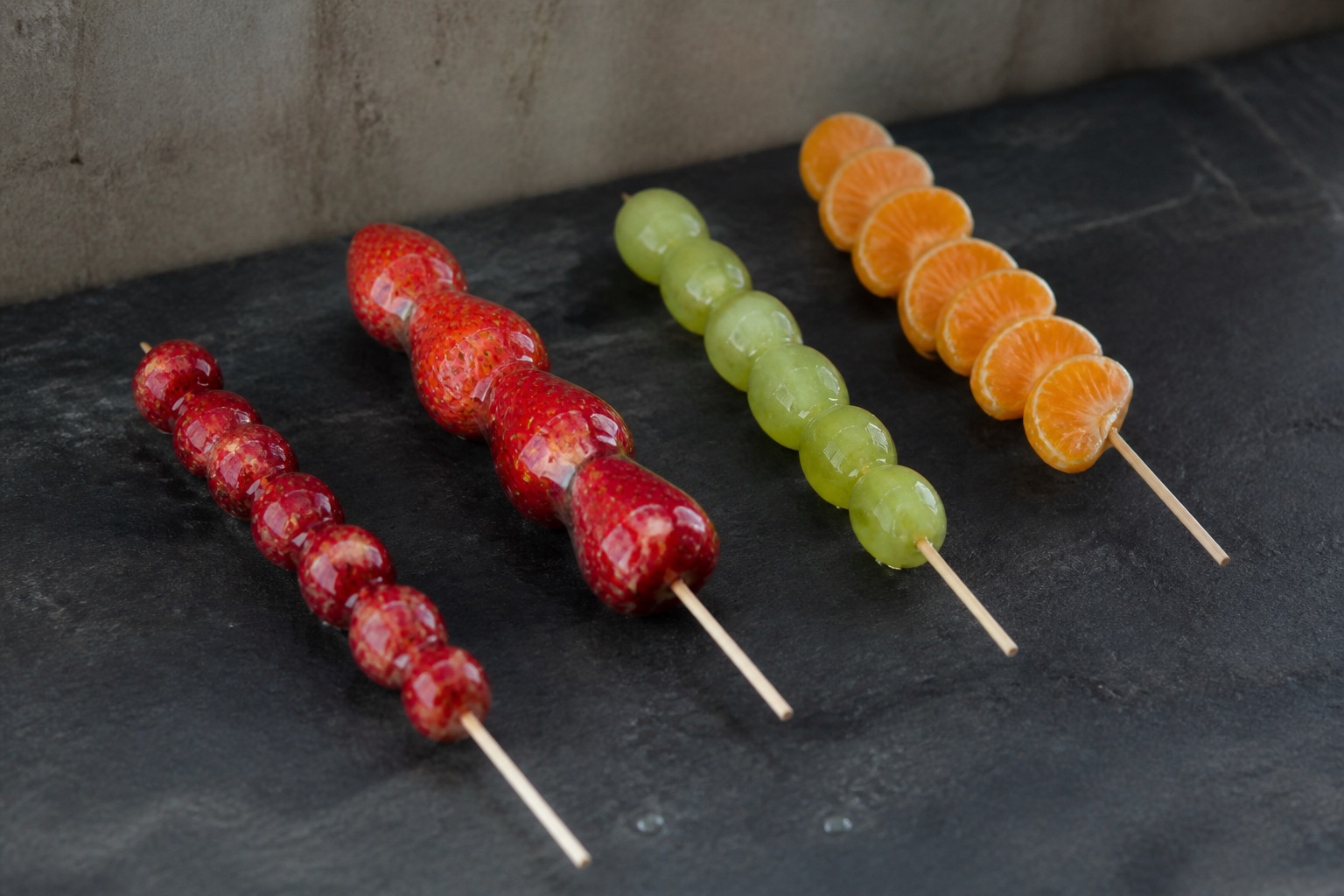
Tanghulu is immediately recognizable: glossy fruit, a clear sugar shell, and vivid color arranged on a bamboo skewer. Online, that appearance often becomes the entire story.
This project looks beyond the surface to consider where tanghulu comes from, what it has meant in everyday cultural life, and how digital circulation changes the way it is understood. The aim is not to freeze the tradition in one form, but to notice the contexts that give its changing forms meaning.

01 · Origins
Before the image became a trend
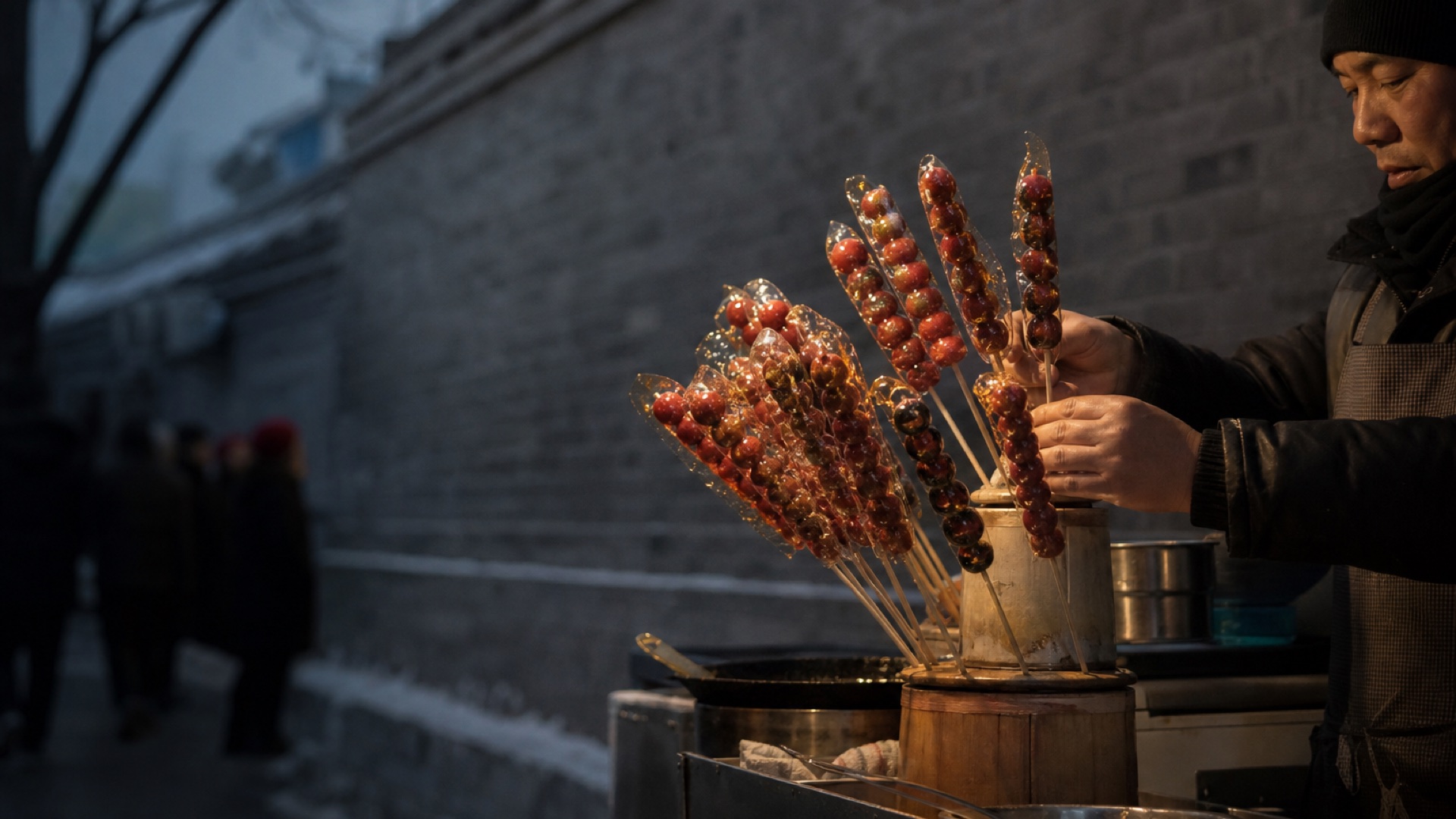
Tanghulu is closely associated with northern Chinese cold-weather street life. Its familiar form pairs fruit—traditionally hawthorn—with a hardened sugar coating and a simple bamboo skewer. The contrast between tart fruit and brittle sweetness is part of the experience, but so are the conditions around it: winter air, the movement of the street, and the moment of buying food from a vendor.
These surroundings do not provide a single fixed origin story. They do, however, help locate tanghulu within everyday cultural practice rather than treating it as a visual object without a setting. Studying the tradition begins by restoring that relationship between material form, season, and place.
A tradition is not only what appears in the frame. It is also the season, the street, the memory, and the people surrounding it.
02 · Cultural Meaning
More than sweetness
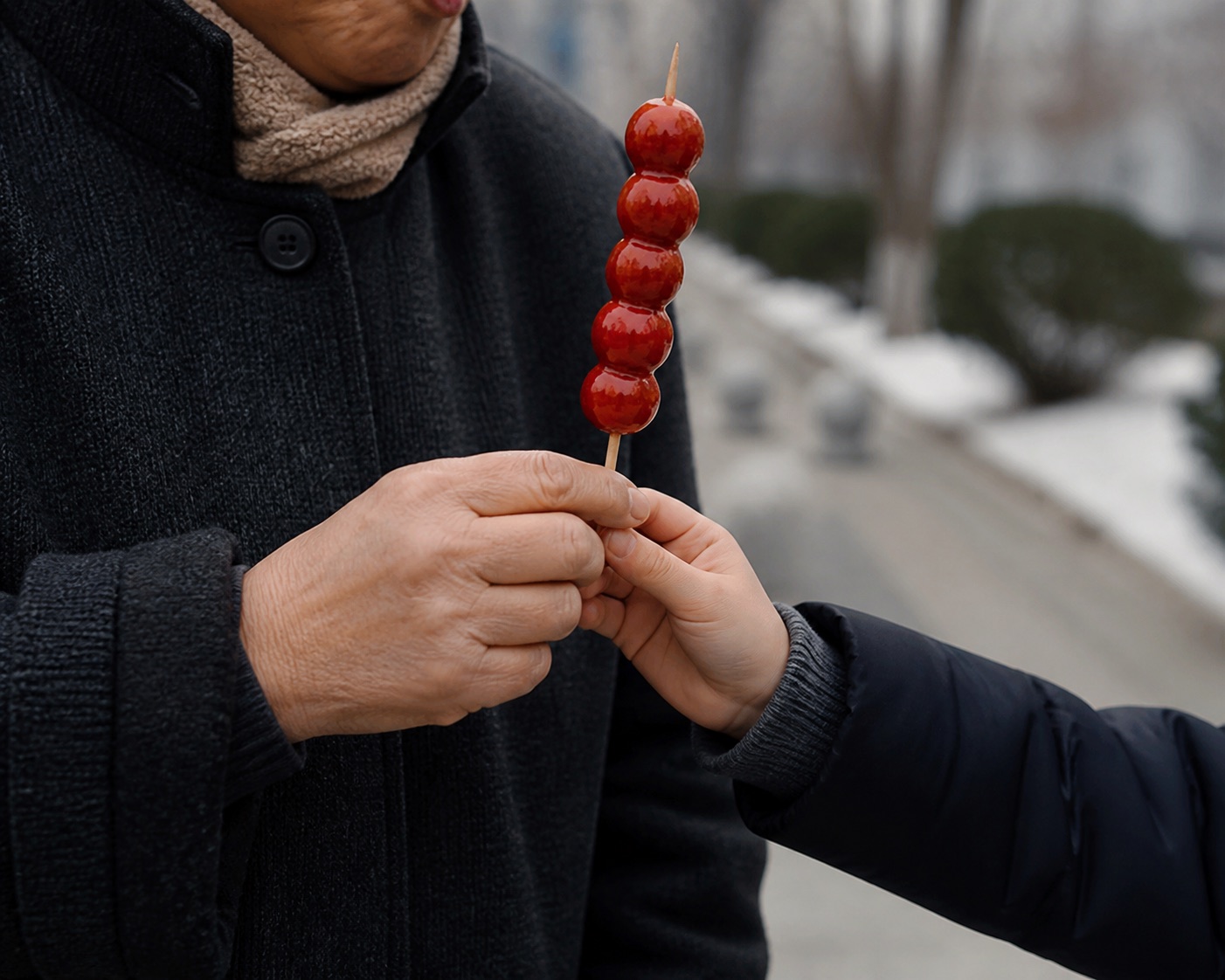
Food can hold meaning through ordinary repetition. A taste encountered in a particular season, a snack shared while walking, or a familiar street display may become connected to memory long before anyone explains that connection in words.
For tanghulu, cultural significance is not contained in a single symbol. It emerges through many personal and communal experiences: anticipation, texture, place, adaptation, and the recollection of people who were present. Recognizing those layers keeps the tradition connected to lived experience rather than reducing it to color and shape.
Contemporary variations are part of this story too. Changing fruit, presentation, and setting can demonstrate continuity through adaptation, provided the earlier contexts are not treated as irrelevant.
Project Gallery
Tanghulu
in context
01 05

03 · Digital Representation
When the snack
meets the screen
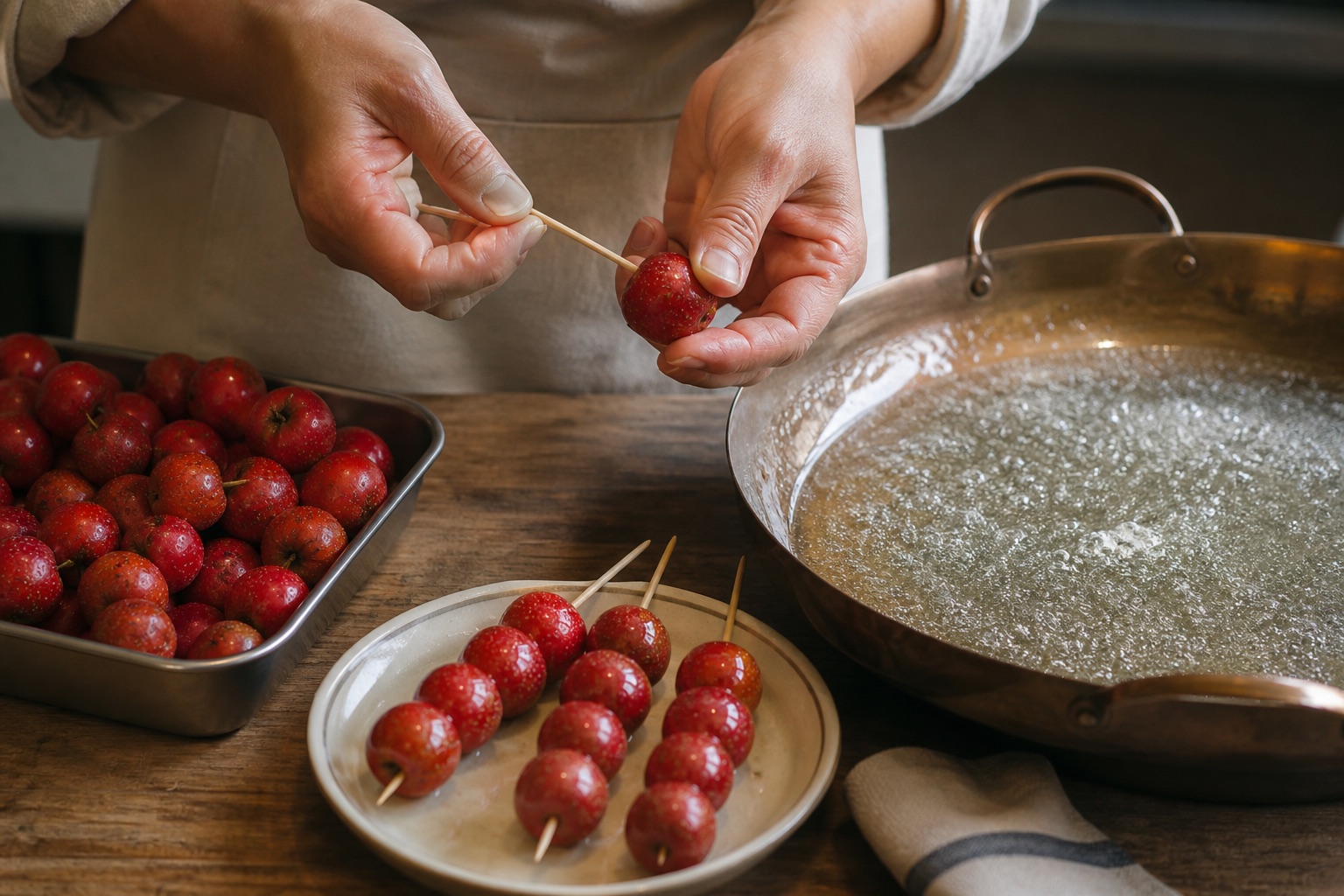
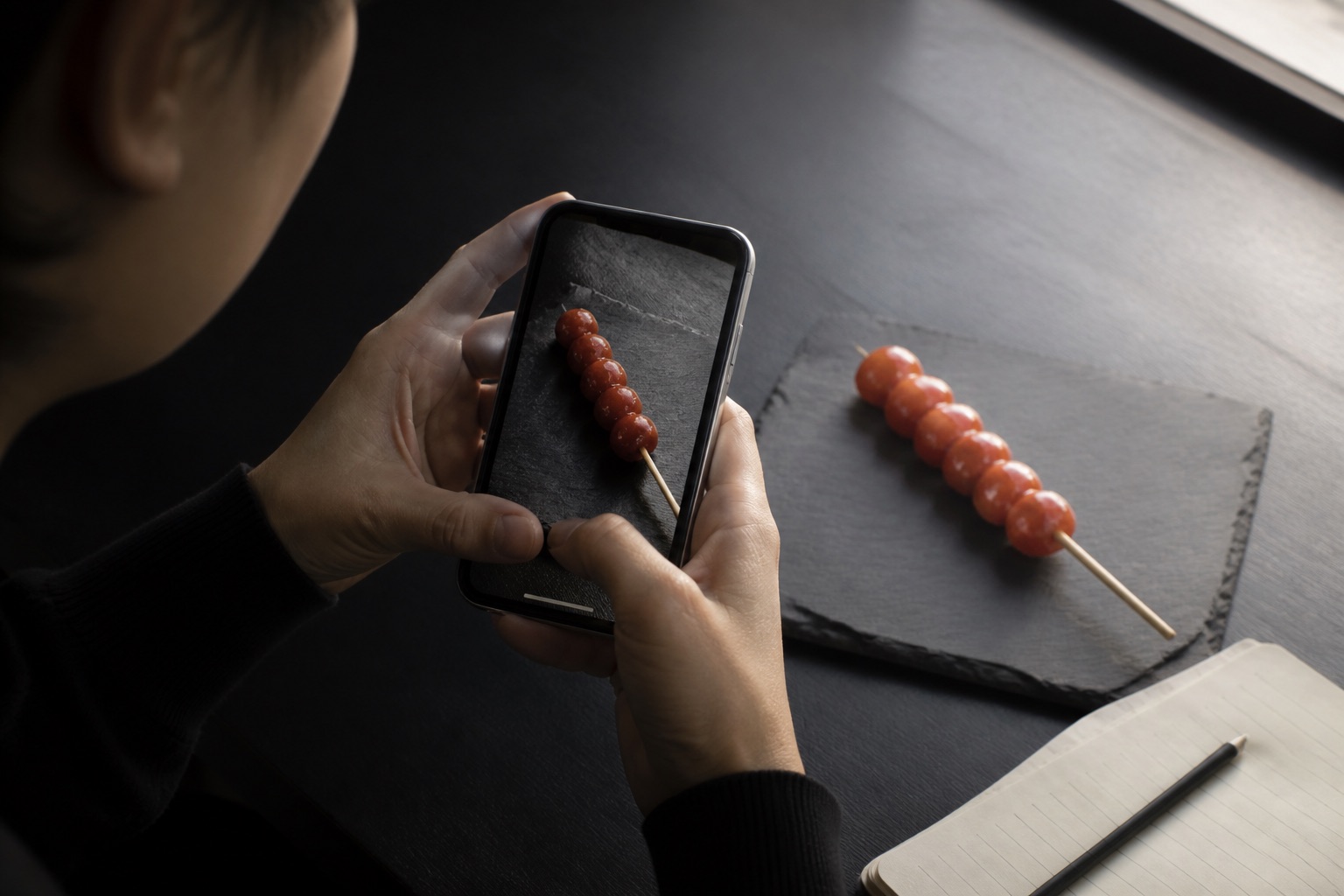
Digital images can carry tanghulu far beyond the places where viewers first encountered it. Short videos, food photography, recipes, and reaction content create new points of entry. They can inspire curiosity and encourage experimentation across different communities.
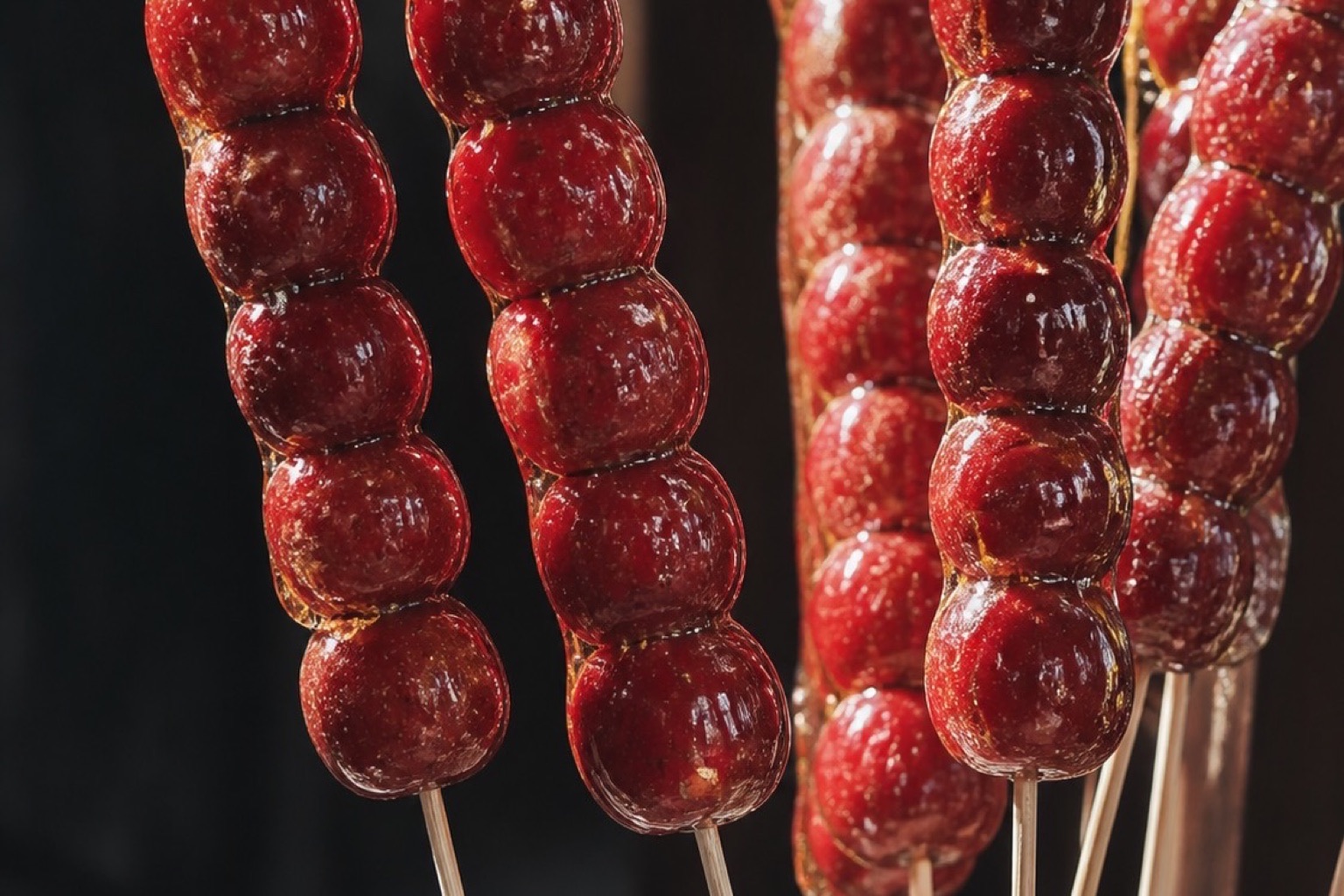
Yet the camera also selects. A close crop emphasizes shine, color, and the moment the sugar shell breaks. Repetition favors the qualities that read quickly on a screen. Season, geography, memory, and the knowledge of preparation may remain outside the frame.
The question is not whether online change is authentic or inauthentic. It is what each representation makes visible—and what additional context a careful viewer should seek.
Recognition can begin with an image. Understanding asks us to look beyond it.
What remains when the image travels?
Digital circulation can introduce a tradition to new audiences, but recognition is not the same as understanding. Looking beyond tanghulu’s visual appeal reveals a story shaped by place, season, memory, adaptation, and cultural continuity.
The image is one point along that story—not its end.