
Introduction
More than an aesthetic
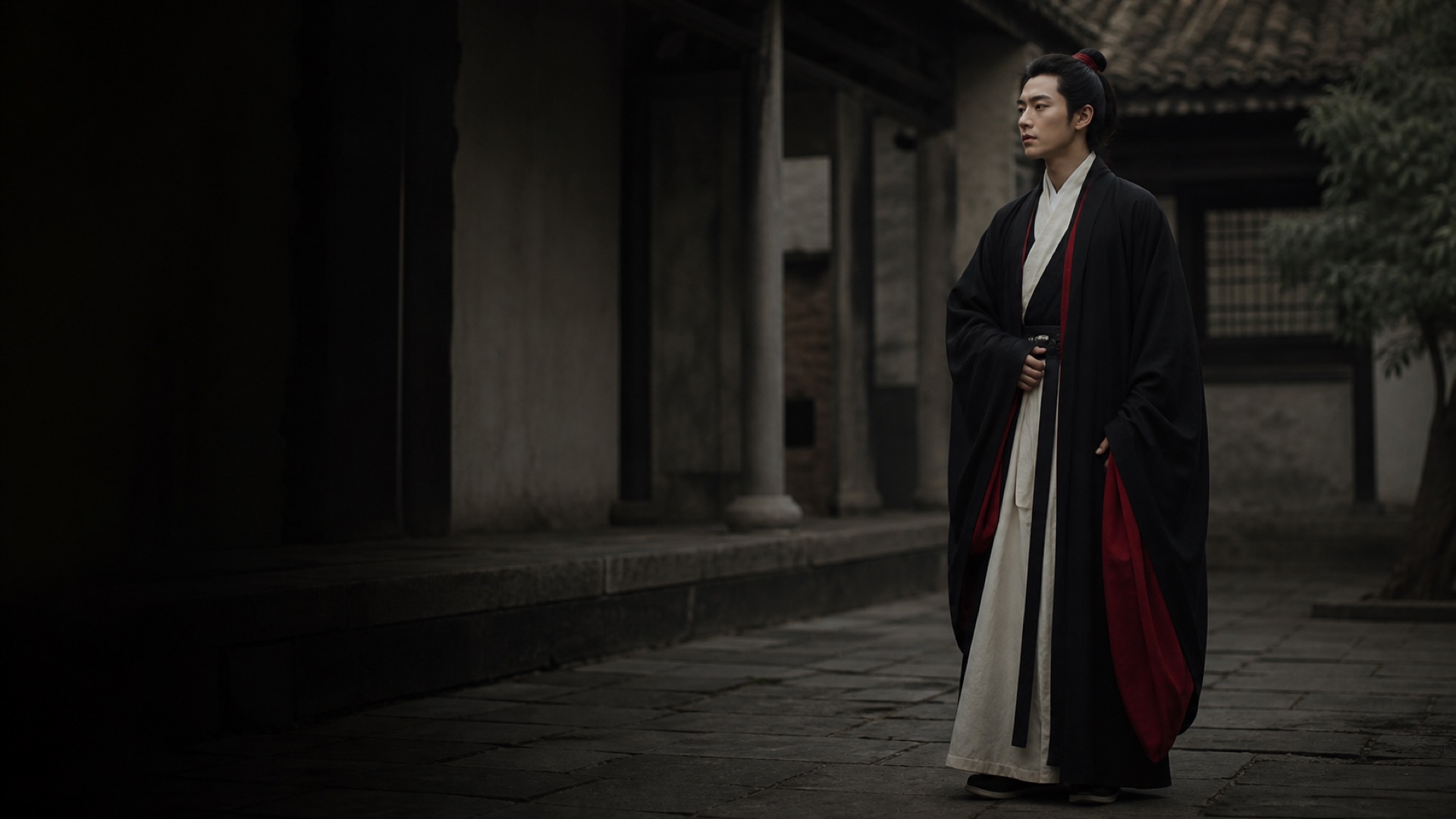
Hanfu is often introduced online through a striking silhouette: layered fabric, long sleeves, and a carefully arranged image of the past. Yet clothing is never only what the camera sees.
Garments gather meaning through the people who make, wear, remember, study, and reinterpret them. For contemporary participants, hanfu can offer a way to encounter historical material culture, join a community, experiment with personal style, or ask how cultural identity is carried in the present. Those experiences are not identical, and no single image can stand for all of them.
This project follows hanfu across three connected settings: historical research, present-day cultural practice, and digital circulation. Rather than deciding whether every modern version is “authentic,” it asks a more useful question: what knowledge, intention, and relationship become visible when someone wears the past today?
What changes when historical dress becomes a personal practice, a public image, and a searchable category at the same time?
01 · Origins
Clothing across changing histories
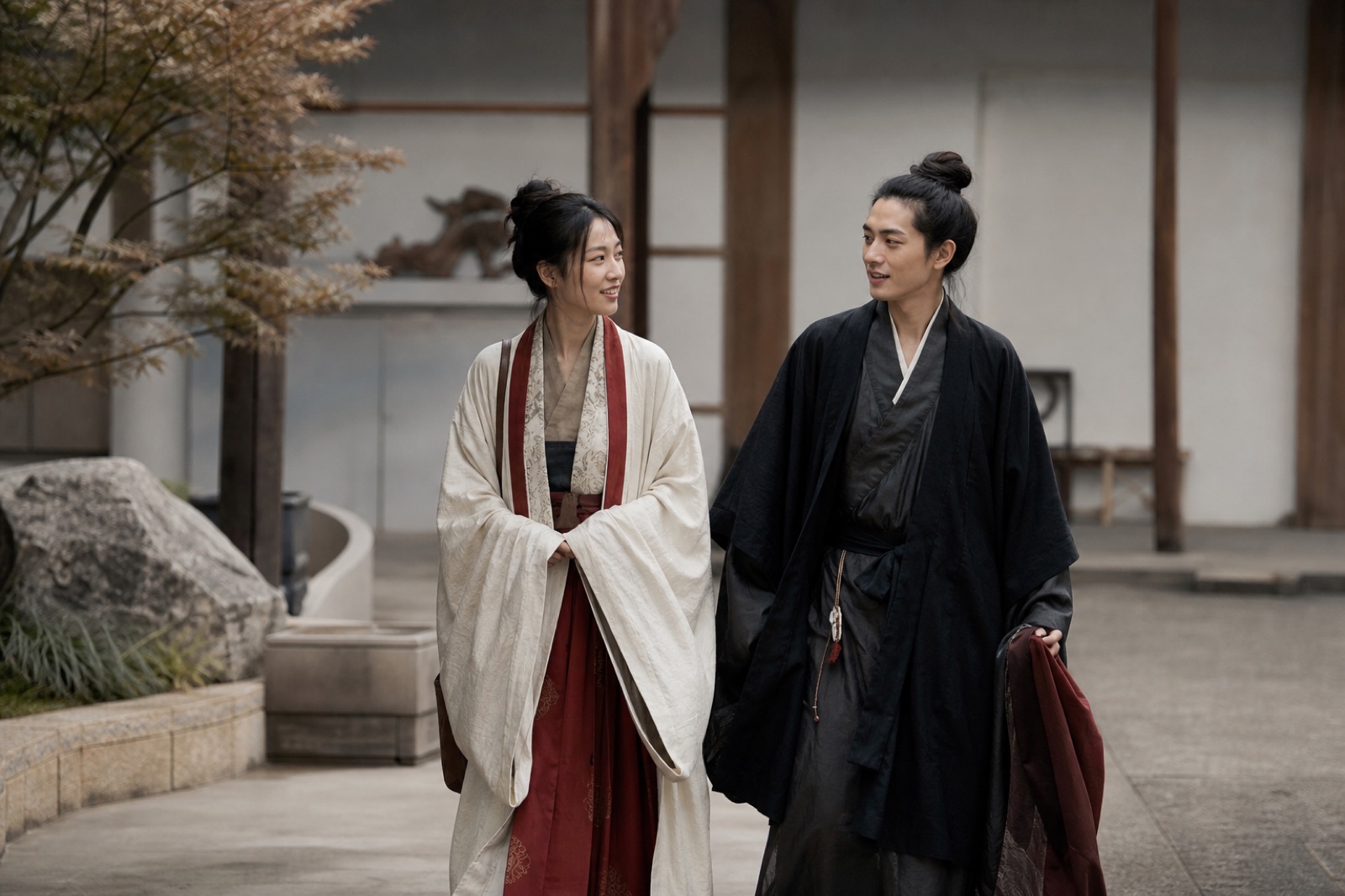
“Hanfu” is now widely used as an umbrella term for clothing associated with Han Chinese histories. The word is convenient, but the garments it gathers together did not emerge from one moment or remain unchanged. Forms of dress developed across dynasties, regions, social settings, occupations, and material conditions. Sleeves, collars, fastenings, proportions, and textiles shifted as people and institutions changed.
That variety matters. Treating hanfu as one timeless costume can flatten a complex clothing history into a recognizable outline. Historical paintings, excavated objects, written records, and surviving garments can each provide evidence, but each source also has limits. Careful research compares them instead of using one dramatic image as a universal rule.
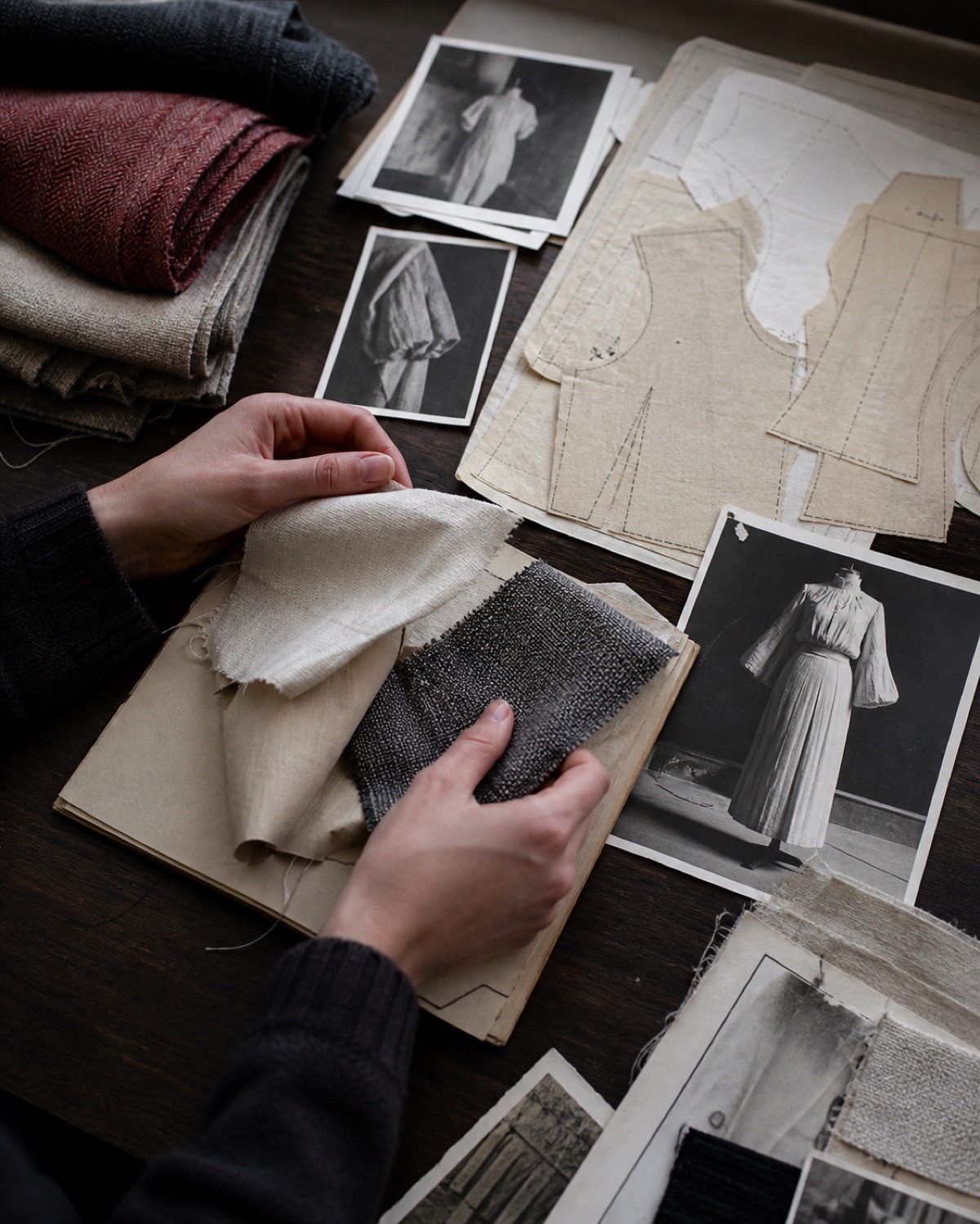
Contemporary reconstruction therefore involves interpretation. A maker may study an extant garment, adapt a pattern to available fabric, and consider how a modern body moves through a modern day. The result can be historically informed without pretending to erase the distance between then and now. That distance is not a failure; it is part of the story the garment tells.
02 · Cultural Meaning
Wearing memory in the present
Clothing becomes cultural through use. It can mark an occasion, create a sense of belonging, express respect, or open a conversation between generations. For some wearers, hanfu is a route toward learning: the decision to put on a garment leads to questions about language, craft, ceremony, literature, or family memory. For others, it is also creative practice, social connection, or an ordinary pleasure.
These meanings should not be collapsed into a single statement about identity. Participants approach hanfu through different experiences and hold different views about accuracy, access, commerce, and change. Listening to those differences keeps the research connected to people rather than treating culture as a list of visual symbols.
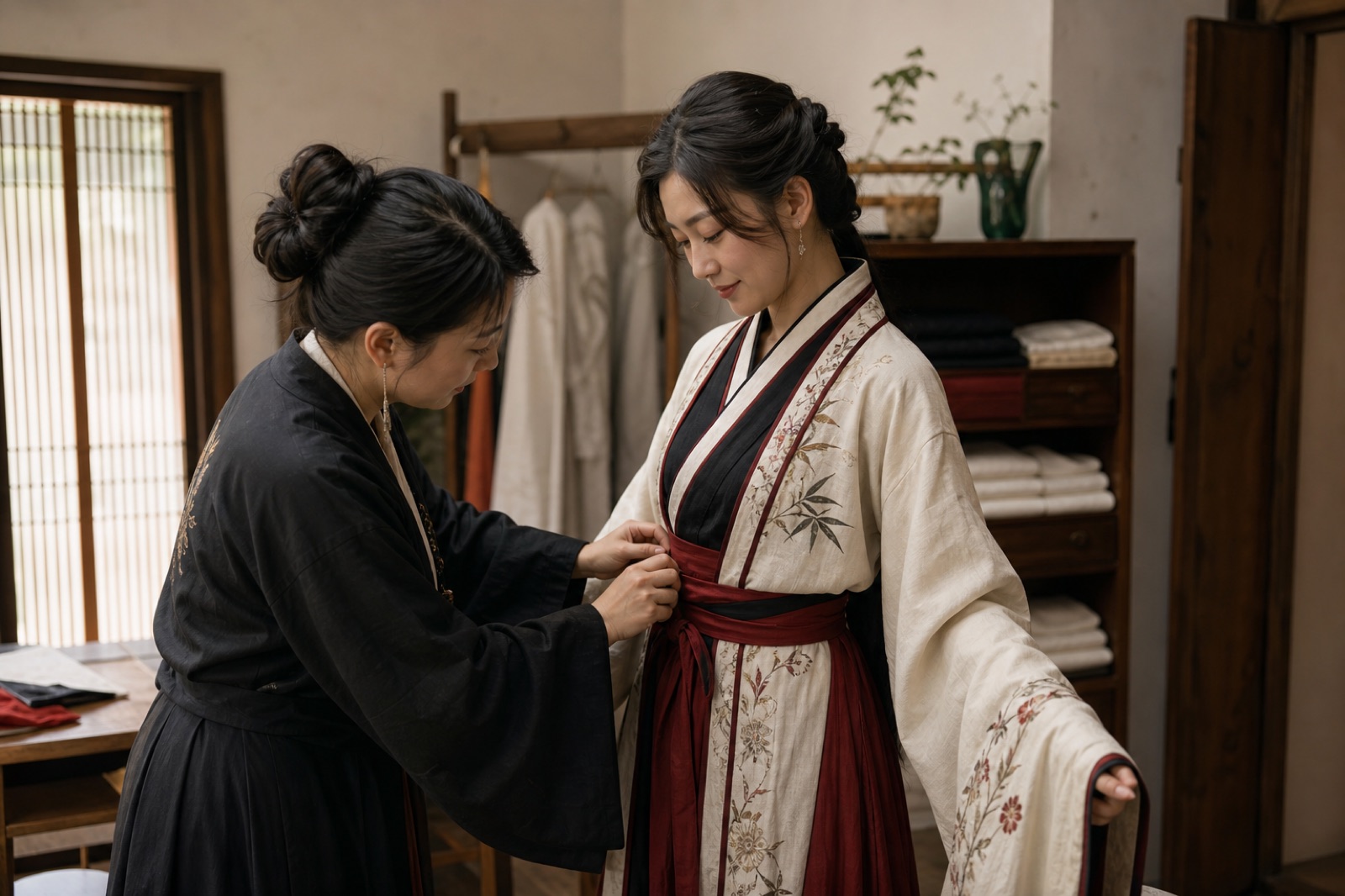
To wear the past is not necessarily to reproduce it. It can also be a way of asking what that past means now.
Contemporary Practice
The past is not simply repeated
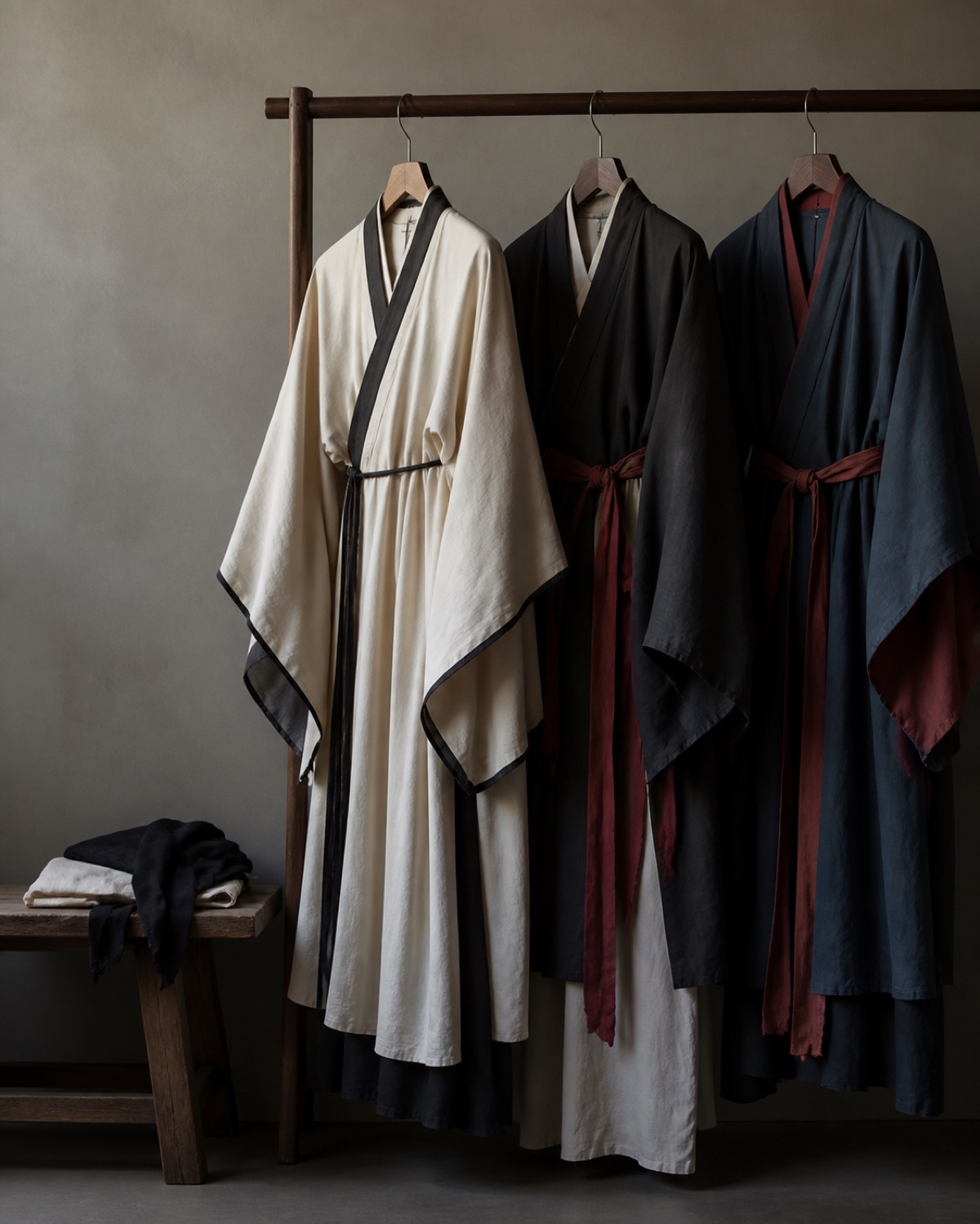
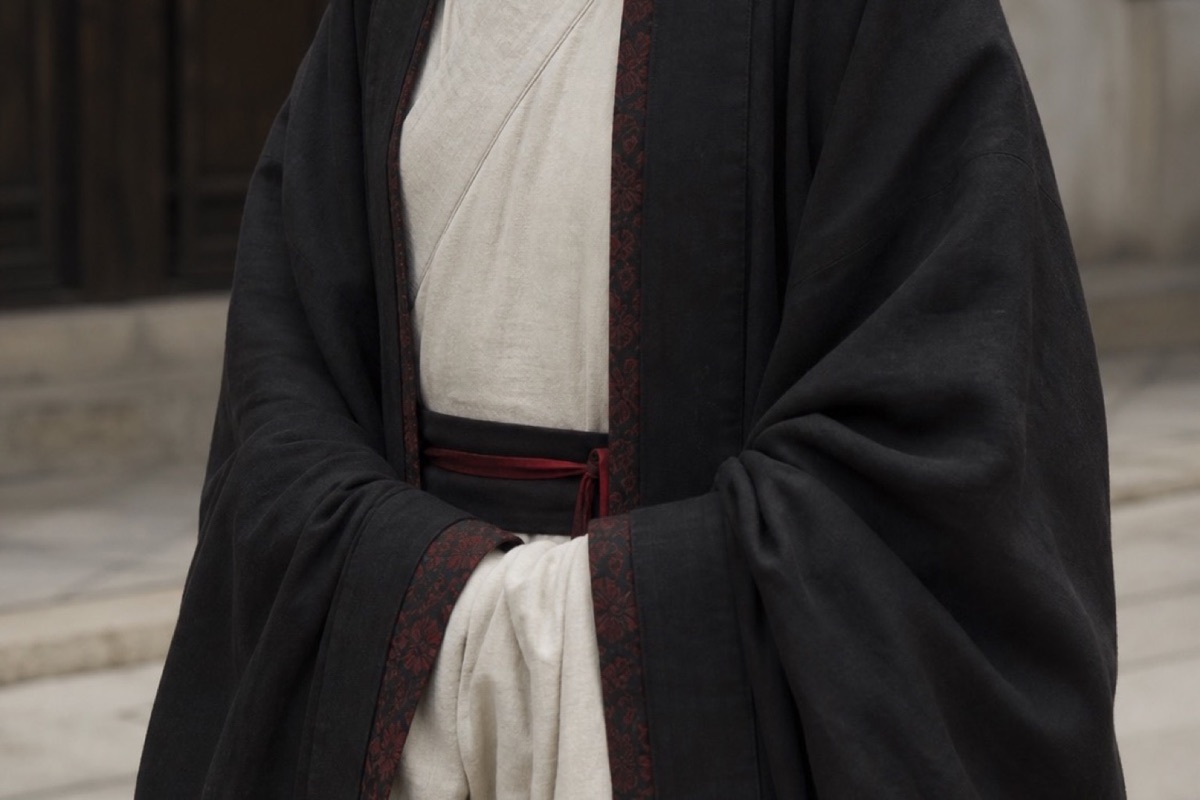
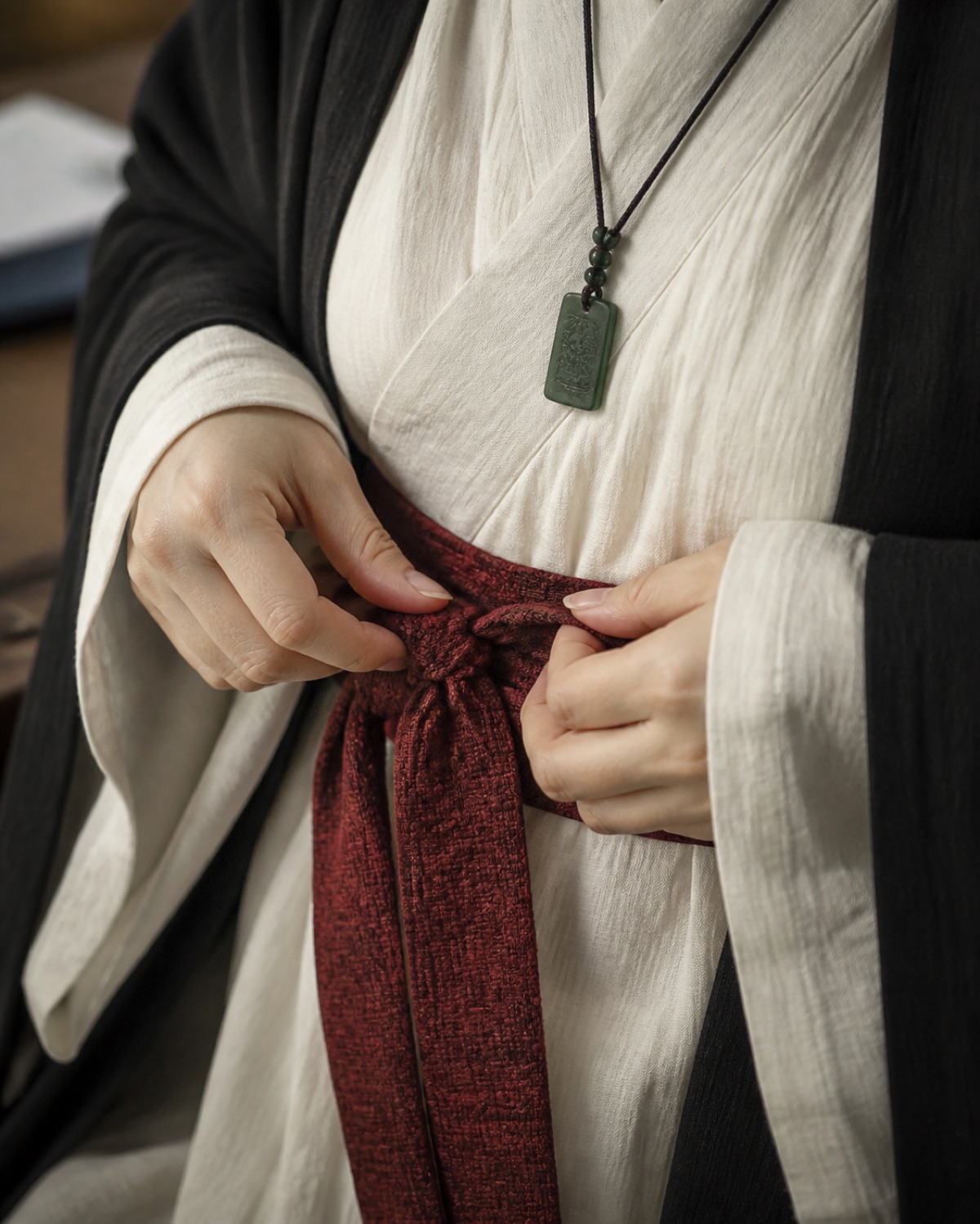
Wearing hanfu today requires practical choices. A person selects fabric, color, layers, accessories, and a setting; they also decide how closely to follow a researched construction and how to adapt it to weather, movement, budget, and daily life. Those decisions reveal that revival is an active process rather than a perfect copy of a finished past.
Commercial growth adds another layer. Greater availability can invite more people to participate and support skilled makers. At the same time, fast production and vague historical labels can make it harder to distinguish documentation from invention. A thoughtful viewer can appreciate contemporary creativity while still asking where a design came from and how it is described.
03 · Digital Representation
When clothing becomes content
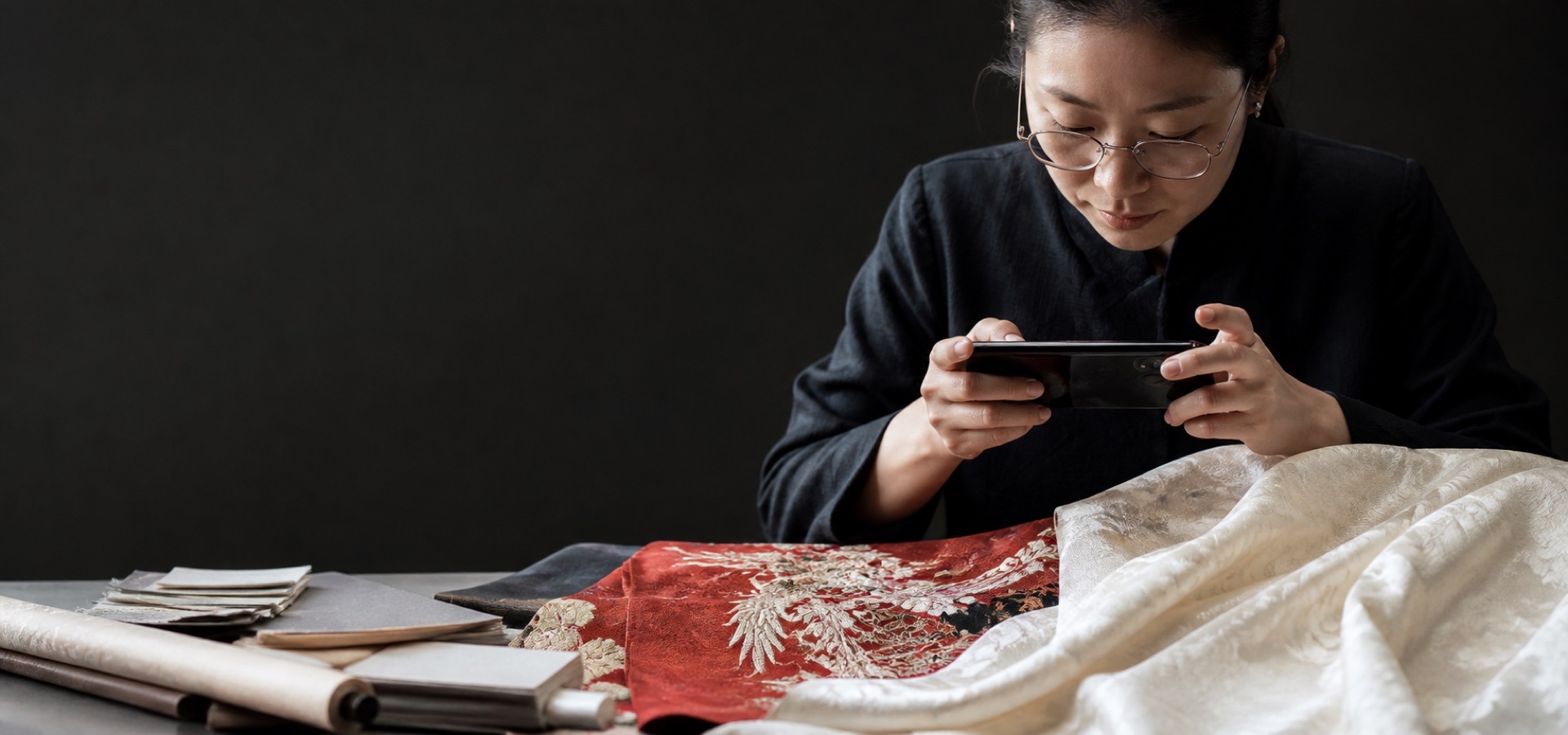
Digital platforms have helped hanfu communities find one another, share practical knowledge, document events, and make historical references easier to encounter. A short video can demonstrate how a layer is tied; a maker can explain a pattern; a wearer can place their own experience beside thousands of others. Visibility can create genuine curiosity.
The same platforms reward immediate recognition. Flowing sleeves, dramatic movement, romantic scenery, and compressed labels travel faster than patient explanation. Search results can mix careful reconstruction, fantasy costume, contemporary fashion, and unrelated dress beneath the same term. The issue is not that images are beautiful, but that beauty may be mistaken for context.
A closer reading asks what a post provides:
- Does it name a historical reference or material source?
- Does it distinguish interpretation from documentation?
- Whose voice explains the garment and its significance?
- What remains outside the crop, caption, or trend?
These questions do not close the door on participation. They keep it open to learning. Digital representation is most useful when an appealing image becomes the beginning of inquiry rather than the end of it.
Reflection
Dressing the past, imagining the present
Hanfu does not offer one uncomplicated route back through time. It offers a meeting place where evidence, memory, identity, creativity, and public representation can be examined together.
To follow that meeting carefully is to value both continuity and change. Historical specificity prevents the past from becoming a vague aesthetic; attention to living participants prevents it from becoming a sealed display. Between them, clothing can act as a question worn in public: what do we inherit, how do we understand it, and what will we carry forward?
Research Notes
Works Cited
- [Author]. “[Article or Chapter Title].” [Publication or Book Title], [Publisher], [Year], [page range or URL].
- [Museum or Archive]. “[Collection Object or Research Essay].” [Collection name], [date], [URL].
- [Researcher or Maker]. “[Interview or Recorded Conversation].” Interview by [Contributor], [date].
- [Creator or Organization]. “[Digital Post, Video, or Exhibition].” [Platform], [date], [URL].
Citation placeholders are provided for editing and do not represent published sources.